
Video, access control, intercom and BMS traffic now converge on IP backbones. Keeping those systems online depends on a fiber plant designed without single points of failure.
1. Single-mode (OS2) vs multi-mode (OM4)
OM4 multi-mode fiber is cost-effective for 10 Gb/s links over shorter runs (up to around 400 metres for 10GBASE-SR). For campus backbones, risers between buildings and external duct banks, OS2 single-mode is often preferred because it supports much longer distances and future upgrades to 40/100 Gb/s and beyond. Typical OS2 attenuation is around 0.35 dB/km at 1310 nm.
2. Protecting outdoor routes
- Use armoured, water-blocked (gel-filled or dry water-blocked) loose-tube cable in underground ducts.
- Fusion-splice in sealed enclosures with heat-shrink protection sleeves.
- Seal duct entries to keep out sand and water.
3. Resilient ring topologies
Ring protection such as ITU-T G.8032 Ethernet Ring Protection Switching can restore traffic in well under a second when a cable is cut — for example by accidental excavation. Route the two sides of a ring along physically separate paths, otherwise one incident can cut both.
4. Test and document
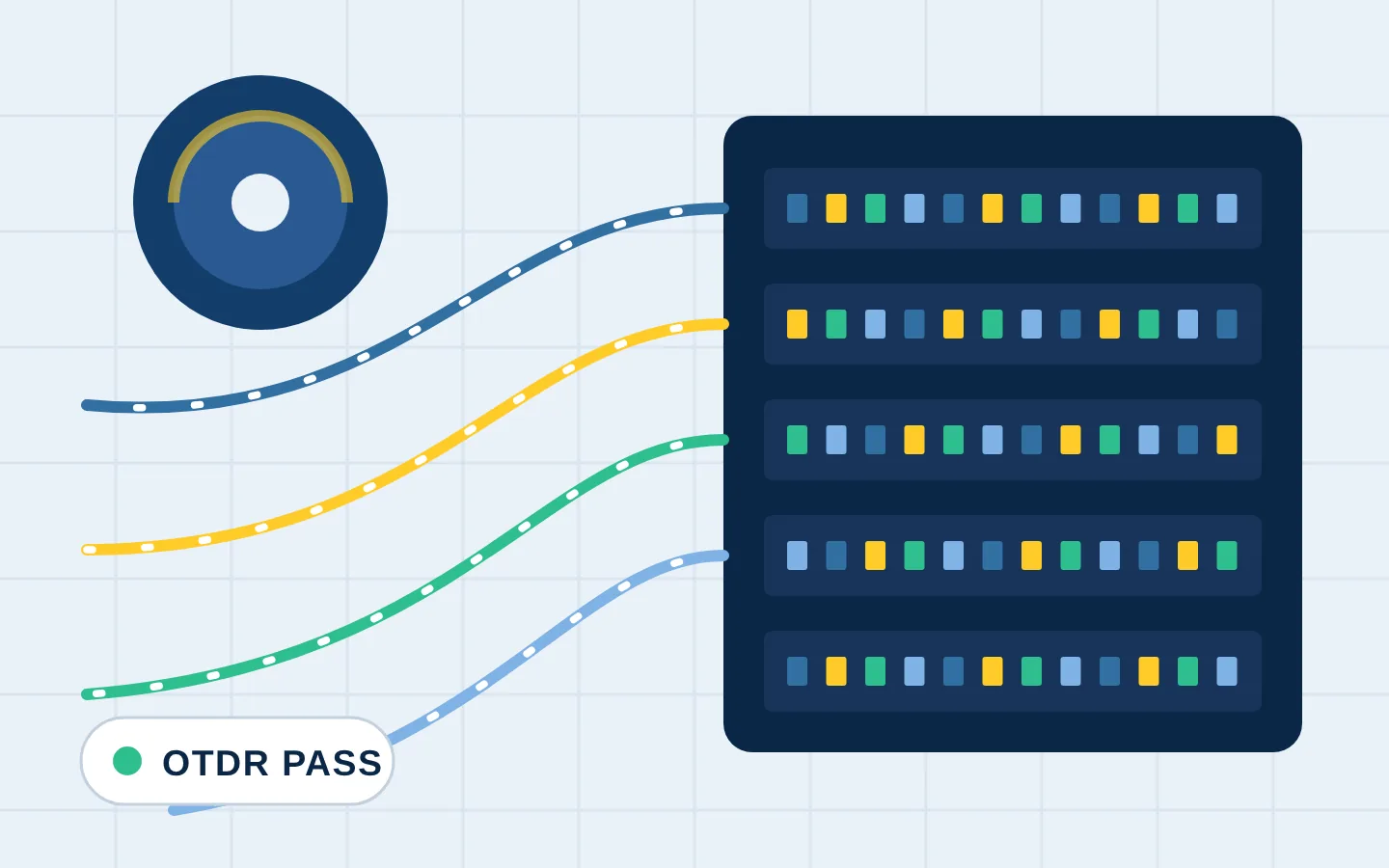
Every link should be certified: insertion loss against a calculated loss budget, plus bi-directional OTDR traces that show each splice and connector. Keep the results with as-built route drawings for future maintenance.
Designing a backbone between buildings?
Check My Fiber Route