
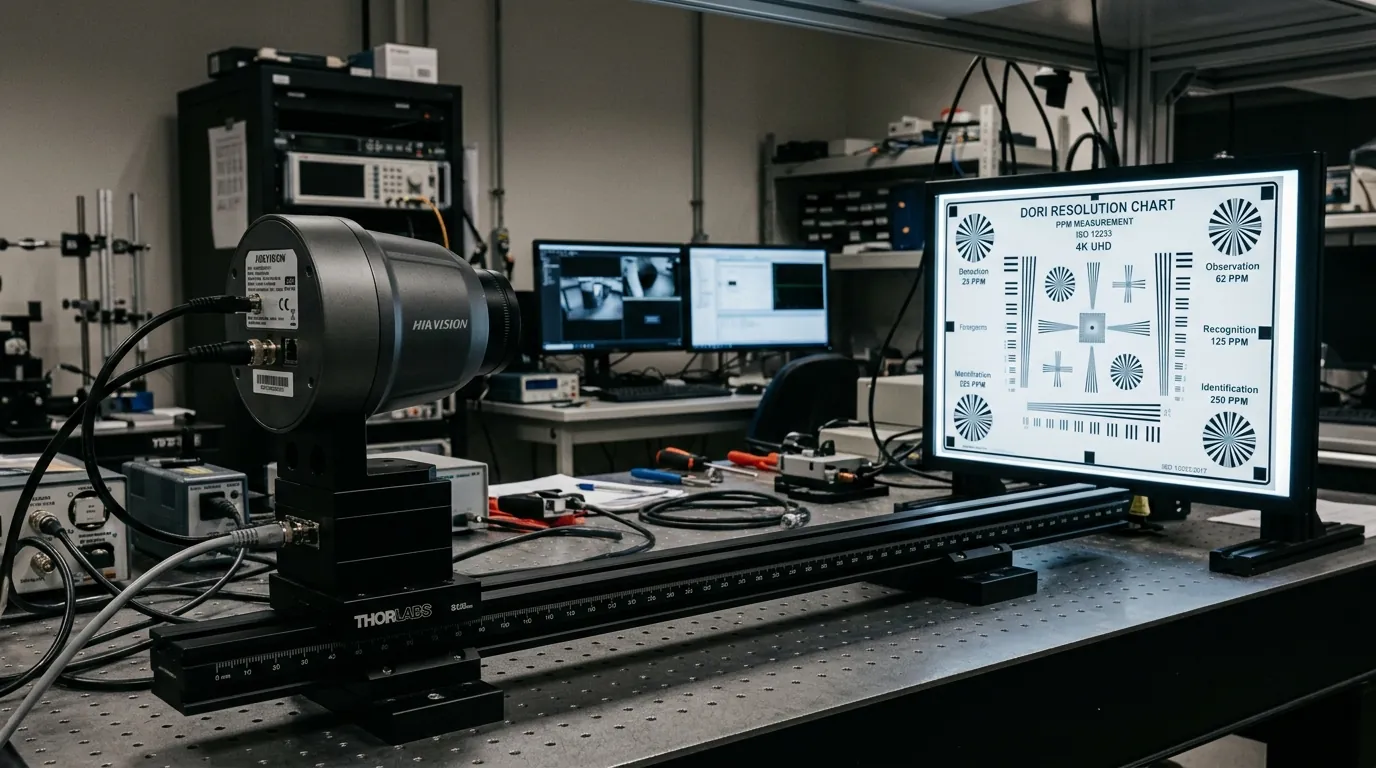
High-density commercial spaces in Doha present distinct optical challenges, from strong backlight and reflections off polished stone and glass to high exterior temperatures. This briefing reviews DORI pixel-density targets based on EN 62676-4 and how to apply them when planning cameras for compliance-focused projects.
1. The DORI framework in practice
DORI expresses the pixel density — pixels per metre (PPM) across the scene — needed to achieve a defined outcome:
- Detection (25 PPM): distinguish a person from the background.
- Observation (62 PPM): see characteristic details such as clothing and behaviour.
- Recognition (125 PPM): determine whether an individual matches someone already known.
- Identification (250 PPM): identify an individual beyond reasonable doubt.
2. Pixel density calculation
PPM = horizontal resolution (pixels) ÷ field-of-view width (metres)
Example: a 4K camera (3,840 horizontal pixels) covering a 15-metre-wide entrance gives 3,840 ÷ 15 = 256 PPM, which meets the 250 PPM identification target at that width. Check the required level for each area against the requirements that apply to your facility.
3. Camera selection for high-ceiling atriums
In tall atriums common in Lusail and West Bay, mounting heights above 8 metres create steep viewing angles. Varifocal motorised lenses (for example 2.8–12 mm or 8–32 mm) let each camera be framed precisely, and true wide dynamic range helps preserve facial detail against bright glazing. Where possible, place identification cameras at entry points closer to head height.
4. Storage and bandwidth
Modern codecs such as H.265 and vendor “smart” encoding can reduce average bitrates substantially in quiet scenes. Savings depend on scene activity and settings, so size storage from realistic bitrates and verify after commissioning. Our storage calculator shows the method.
Key takeaways
- Define the purpose of each camera before choosing a model.
- Calculate PPM at the furthest point where the target outcome is needed.
- Plan for glare, reflections and heat from the start.
Planning cameras for a dense, busy site?
Review My Camera Layout