
Why Fiber Optic matters for your facility
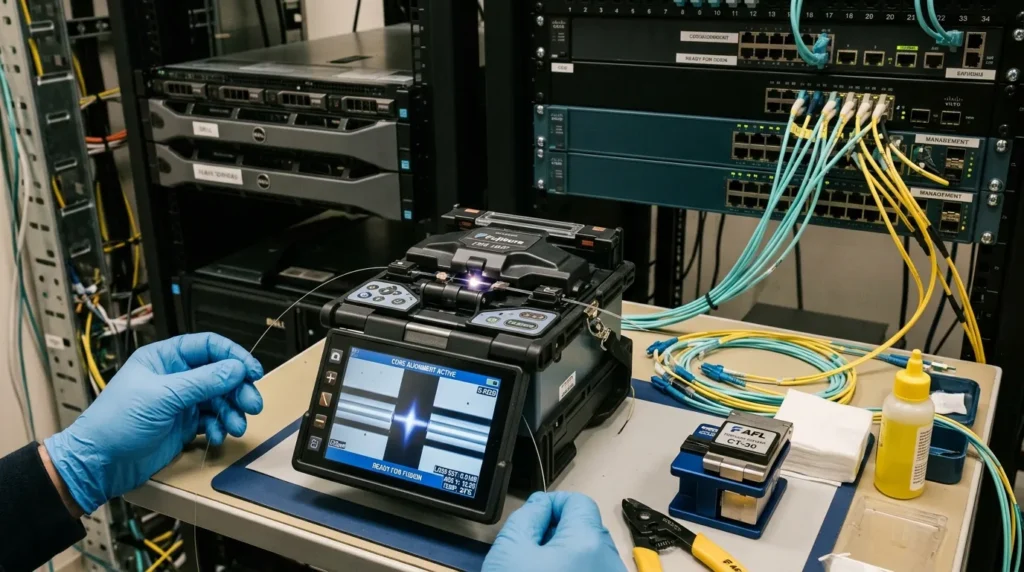
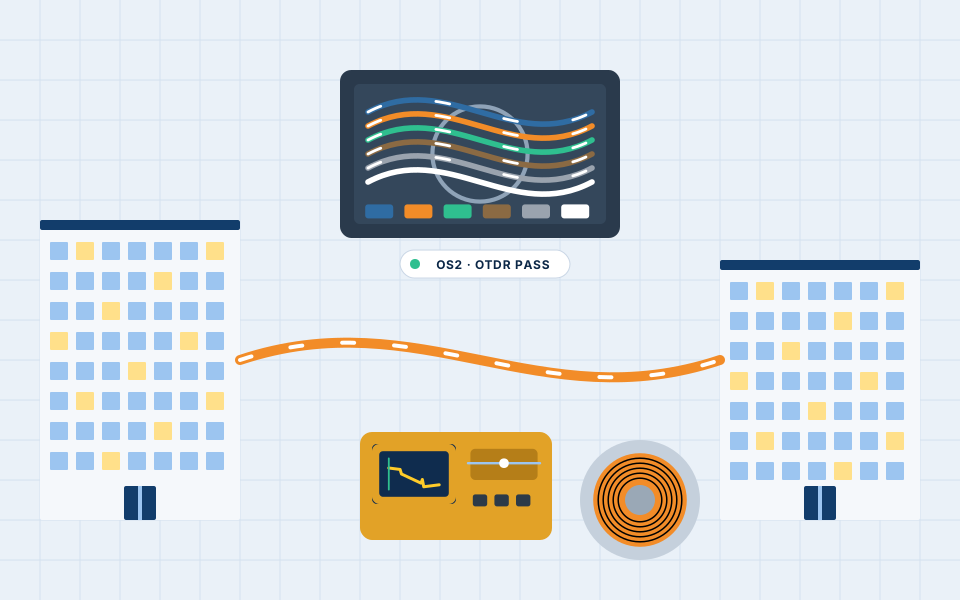
We select single-mode or multi-mode fiber according to distance and future bandwidth, calculate link-loss budgets, and install indoor or armoured outdoor cables in appropriate ducts. Fusion splices are made in protected enclosures and every link is tested end to end, with OTDR traces documenting each event along the route.
Fiber Optic key specifications
| Fiber types | OS2 single-mode and OM4 multi-mode |
|---|---|
| Connectivity | LC duplex and MPO/MTP high-density cassettes |
| Splicing | Core-alignment fusion splicing in protected enclosures |
| Testing | Insertion-loss and bi-directional OTDR testing |
Installed to TIA-568.3 and ITU-T G.652.D/G.657 fiber specifications with documented test results.
What our Fiber Optic scope includes
- Backbone topology and loss-budget calculations
- Indoor, outdoor and armoured fiber installation
- Fusion splicing, ODFs and patch management
- MPO/MTP pre-terminated trunks for data centres
- Insertion-loss and OTDR test reports
Where we install Fiber Optic
- Building risers and campus backbones
- Data centres and server rooms
- Perimeter CCTV and remote sites
- Industrial plants with high electrical interference
Fiber Optic engineering considerations
Single-mode for growth
OS2 single-mode supports long distances and future speeds, so it is often preferred between buildings and in risers.
Ring resilience
Ring or dual-path routes keep CCTV and access systems online if one cable is damaged.
Outdoor protection
Armoured, water-blocked cables and proper duct sealing protect fiber in hot, sandy ground.
Fiber Optic questions answered
Why use fiber instead of copper?
Fiber carries more bandwidth over much longer distances and is immune to electrical interference, making it ideal for backbones and outdoor links.
What is an OTDR test?
An optical time-domain reflectometer test shows the loss of each splice and connector along a fiber, proving the quality of the installation.
Ready to scope your Fiber Optic project?
Share floor plans, a BOQ or a short brief. Our engineers will size the Fiber Optic design, recommend suitable equipment and confirm the next step for your site.